Sir Simon de Canterville
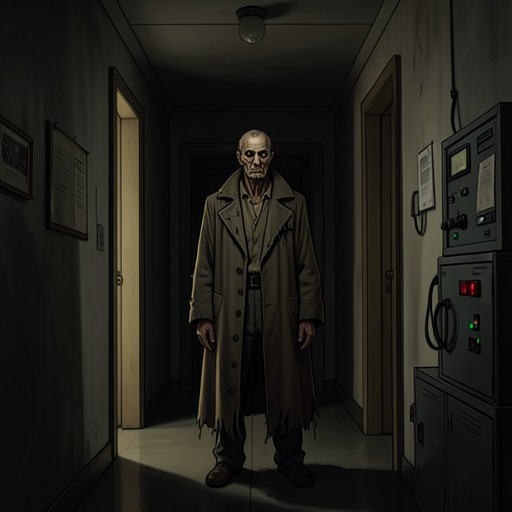
The Canterville GhostSir Simon de Canterville is the ghost of Canterville Chase, a murderer whose own hidden fate turns the house’s haunting from a comic contest into a story of confinement and sought-for redemption. For centuries he performs the role of a fearsome specter; when Virginia Otis meets him in his sorrow, however, his need is no longer to frighten the living but to sleep and find peace.
Identity and the history of the haunting
The account of Sir Simon begins with the Canterville bloodstain in the library. Mrs. Umney identifies it as the blood of Lady Eleanore de Canterville, murdered there by her husband in 1575. Sir Simon survived her by nine years and then disappeared under mysterious circumstances; his body, she says, was never found, although his guilty spirit continued to haunt the Chase. The stain’s persistence makes the house’s history visible in an ordinary room, and links the ghost’s reputation to a specific act of violence within the family.
That history is initially received as a legend that the American household can manage or dismiss. Washington Otis removes the stain with Pinkerton’s Champion Stain Remover and Paragon Detergent, but its disappearance is immediately followed by lightning, thunder, and Mrs. Umney fainting. The episode sets up a recurring mismatch: material explanations and practical remedies appear to settle the matter, yet the supernatural returns. When Sir Simon finally appears, his antique, ragged garments and the heavy manacles and rusty gyves hanging from his wrists and ankles supply a physical sign of a past the family has not yet understood.
A theatrical ghost in a modern household
Sir Simon’s first encounter with Hiram B. Otis establishes the story’s central comic reversal. Awakened at one o’clock by a metallic clank and footsteps, Hiram opens his door to find the ghost in the moonlight. Rather than flee, he offers a bottle of Tammany Rising Sun Lubricator for the noisy chains, leaves it by the bedroom candles, and returns to bed. Sir Simon responds by smashing the bottle, groaning, and emitting a green light as he retreats. The Otis twins then appear in white nightclothes and throw a pillow at him. He escapes through the wainscoting, but the encounter has unsettled his confidence more than it has frightened the household.
Sir Simon measures this humiliation against his former career. In a secret chamber in the left wing, he recalls frightening a Dowager Duchess, four housemaids, a rector, and Madame de Tremouillac; he also remembers Lord Canterville’s death after the lord confessed to cheating Charles James Fox, and Lady Stutfield’s eventual death by drowning in the carp-pond. He revisits his celebrated roles, including Red Reuben and Guant Gibeon, and remembers playing ninepins with his own bones on the lawn-tennis ground. The long recital presents haunting as a practiced art and Sir Simon as an egotistical performer proud of his past effects. Its grand catalogue also sharpens the contrast with the modern Americans, who answer the chains with lubricant and the ghost with pillows.
His response to the failed performance is a decision to seek vengeance. Yet the Otis household continues to treat the haunting as a disturbance to be dealt with, rather than as a source of reverence or fear. The result is not a successful return to mastery: the ghost’s old repertoire meets a family that refuses to play the expected audience. That comic defeat prepares for the more serious disclosure that behind the theatrical specter is a lonely and exhausted being.
Virginia’s encounter and his plea for rest
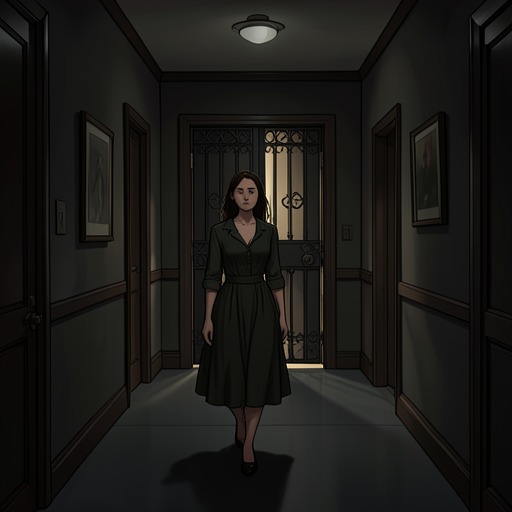
Virginia Otis encounters Sir Simon in the Tapestry Chamber after returning from a ride on Brockley meadows. Having torn her riding habit while getting through a hedge, she takes the back staircase to avoid being seen and looks into the open chamber, supposing her mother’s maid may be there to help mend it. Instead, she finds Sir Simon sitting by the window, watching the autumn leaves fall. His posture and depression are so evident that, although her first impulse is to run away, pity moves her to stay and speak to him.
Virginia initially assumes that the twins’ departure for Eton College will relieve his troubles, and offers to ask her father for an extra week’s holiday for them. Sir Simon begs her not to go: he is lonely, unhappy, and does not know what to do. When she suggests that he need only go to bed and blow out the candle, he explains the depth of the difference between his condition and ordinary tiredness: he has not slept for three hundred years and is weary. Sleep, which Virginia treats as an everyday act, is for him an impossible rest withheld throughout his existence as a ghost.
The conversation turns explicitly toward death. Sir Simon describes it as an end to yesterday and tomorrow, time and life, and a state of peace in the earth. He asks Virginia to open the portals of death’s house for him, declaring that love is always with her and is stronger than death. Her recognition of the Garden of Death and her tears show that the request has moved her, though she trembles and feels as if she were in a terrible dream. The scene reverses the power relation of the earlier haunting: instead of a ghost frightening a living person, a vulnerable ghost asks a child for help.
The prophecy and Virginia’s intervention
Sir Simon explains the Canterville prophecy as the conditions of his release. Virginia must weep with him for his sins because he cannot weep, and pray with him for his soul because he has no faith. If she has been sweet, good, and gentle, the angel of death may have mercy on him. He warns that she will encounter fearful shapes and wicked voices, but says these cannot harm her because of a little child’s purity. The prophecy thus gives a form to his appeal: his release depends on Virginia’s compassion, prayer, and willingness to face what frightens her.
Virginia answers that she is not afraid and will ask the angel for mercy. Sir Simon rises with joy, takes her hand, and leads her across the Tapestry Chamber. The figures embroidered in the faded green tapestry call for her to turn back; grotesque animals on the carved chimneypiece also warn her that she may never return. Sir Simon holds her hand more tightly and continues, while Virginia shuts her eyes to the warnings. The passage through the chamber turns the house’s decorative and frightening images into guardians of a threshold she chooses to cross.
The text does not show the full interval of Virginia’s disappearance, but her return supplies the decisive news. She tells her father that she has been with Sir Simon and that he is dead. She also says that he had been very wicked but was truly sorry for what he had done, and that he gave her a box of beautiful jewels before he died. His death therefore follows the intervention she promised: the former persecutor is remembered not only for his crimes but for his remorse and his final appeal to Virginia.
The secret chamber and the meaning of his fate
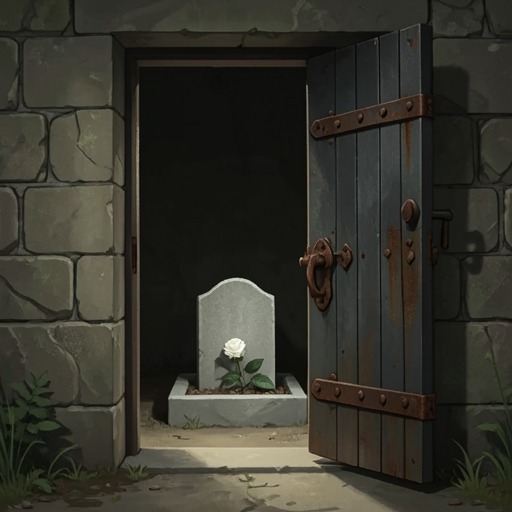
Virginia leads the family through an opening in the wainscoting and down a narrow secret corridor. Washington follows with a candle taken from the table. At the end stands a great oak door studded with rusty nails; when Virginia touches it, it swings open onto a low, vaulted room with a single tiny grated window. The passage ends in the material explanation for the ghost’s chains: a huge iron ring is embedded in the wall, and a gaunt skeleton lies chained to it on the stone floor.
The skeleton’s position reveals the circumstances of Sir Simon’s disappearance. Its fleshless fingers seem to reach for an old-fashioned trencher and ewer placed just beyond reach; the jug is coated inside with green mould, and only dust remains on the trencher. The discovery confirms that his missing body was not an unresolved mystery in the ordinary sense: Sir Simon had been confined in the secret room, where he starved. His manacles and chains, once the props of a ghostly performance, are thereby exposed as signs of the imprisonment that ended in his death.
Virginia kneels beside the skeleton and silently prays, while the family watches the tragedy whose secret has at last been disclosed. The ending recasts the house’s haunting through the contrast between Sir Simon’s past victims and the child who responds to him with pity. His remembered exploits make the ghost’s history morally complicated, but the revelation of his confinement, his remorse, and Virginia’s prayer gives that history a final movement toward rest. Sir Simon’s defeat as a performer becomes, through Virginia’s compassion, the possibility of release from a centuries-long existence without sleep.